


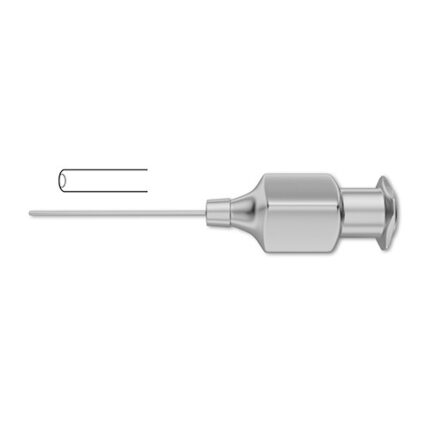
| Name | Maumenee Vitreous Aspirating Needle |
| Lead Time | Lead time advised within 48 hours of order placement. |
| Competitor | ;OP0902591;OP0902-591;E4958;601151;60-1151;6011-51; |
| Specialty | Ophthalmology-Cannulas |
| Material Finish | Stainless Steel |
| Grade | Premium Operating Room |
| Units of Measurement | Each |
| Manufacturer | Tool Tectra |
| Sterility | Non-Sterile |
| Usage | Reusable |
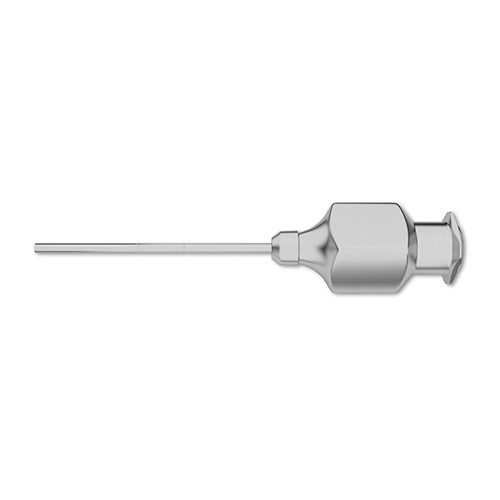
Maumenee Vitreous Aspirating Needle
blunt tip w/ markings, 5.0 mm, 10.0 mm & 15.0 mm, 18-gauge Maumenee Vitreous Aspirating Needle is a commonly used tool in retinal ophthalmologic procedures. The needle features a large gauge designed for the aspiration of the viscous vitreous fluid following retinal detachment or increased pressure. In addition, markings on the gauge aid the physician in navigation of the tool.
Description
Reviews (0)
Shipping & Delivery
Related products
Bishop Harmon Anterior Chamber Irrigator
SKU:
TT-SI-2883
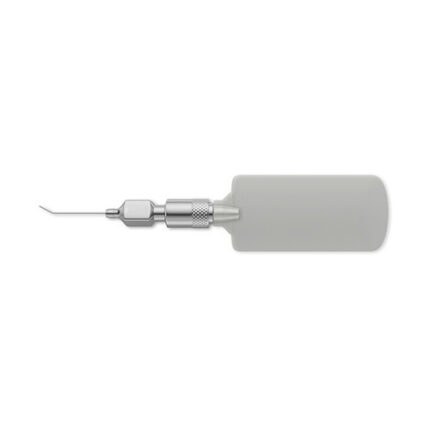
Bishop Harmon Anterior Chamber Irrigator is a frequently used tool in cataract IOL implantation procedures. Following nucleus fragmentation, the irrigator may be used to aspirate any remaining debris from the anterior chamber. The complete set features and adaptor, irrigating cannula, and silicone bulb.
Scheie Anterior Chamber Cannula
SKU:
TT-SI-4543
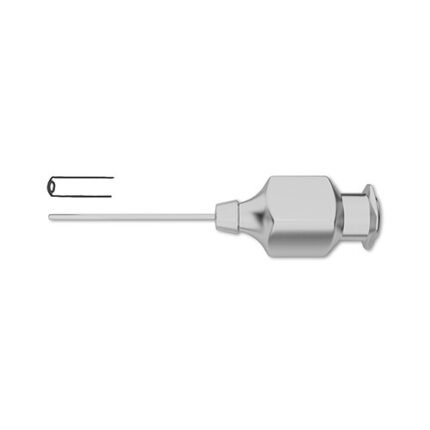
blunt, 27-gauge, 3/4" (2.0 cm)Scheie Anterior Chamber Cannula is a frequently used tool in cataract extraction procedures. The small gauge cannula is nimble enough to fit into a small limbal incision accessing the anterior chamber. It may be used to aspirate fluid within the anterior chamber exposing the lens capsule.
Lieppman Cystotome
SKU:
TT-SI-8322
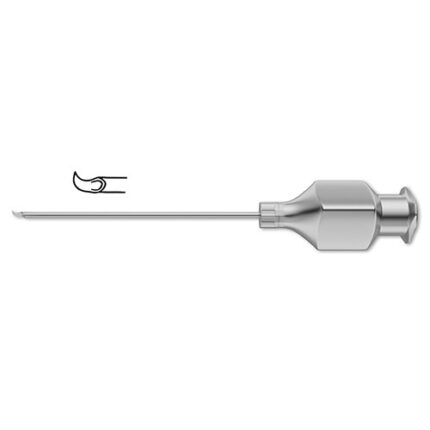
w/ guard, 22-gauge, 2" (5.0 cm)Lieppman Cystotome is a commonly used tool during cataract phacoemulsification procedures. The cystotome may be used to create a circular incision in the anterior capsule before proceeding with aspiration of the lens. The tool features a guard to prevent extraneous damage to the surrounding iris or globe tissue.
Gills-Welsh Cannula
SKU:
TT-SI-6883
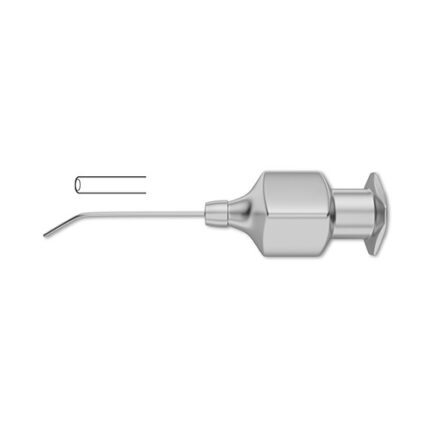
25-gauge, angled Gills-Welsh Cannula is a commonly used tool in cataract and various other ophthalmologic procedures. The small gauge of the cannula may be used to aspirate fluid in the anterior chamber of the eye following a limbal incision. Four different angles are available with the cannula depending on surgical preference.
Knolle Anterior Chamber Irrigating Cannula
SKU:
TT-SI-1655
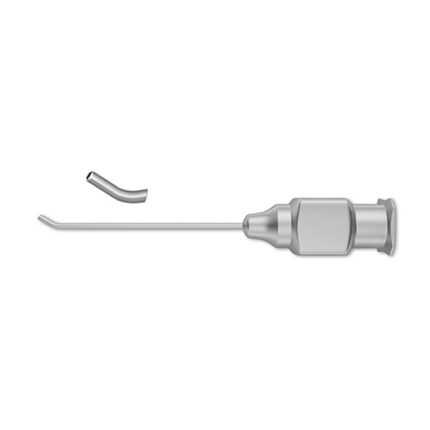
irrigating ports at 12, 10 & 2 o'clock, 23-gauge, overall length tip to hub 1-1/2" (3.8 cm) Knolle Anterior Chamber Cannula is a frequently used tool in cataract extraction procedures. The small gauge cannula with angled tip is nimble enough to fit into a small limbal incision accessing the anterior chamber. It may be used to aspirate fluid within the anterior chamber exposing the lens capsule.
Kratz Capsule Scraper
SKU:
TT-SI-1267
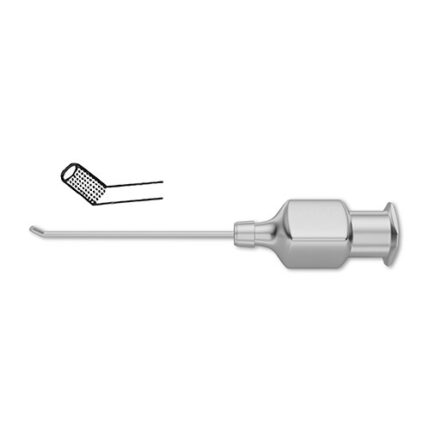
shaft w/ sharp top, shaft angled 60 degrees, 12.0 mm tip from angle to tip, 22-gauge, 1/2" Kratz Capusle Scraper is a useful tool in phacoemulsification procedures. The sandblasted tip is designed to scrape the surface of the posterior capsule to remove and cellular debris following aspiration of the nucleus.
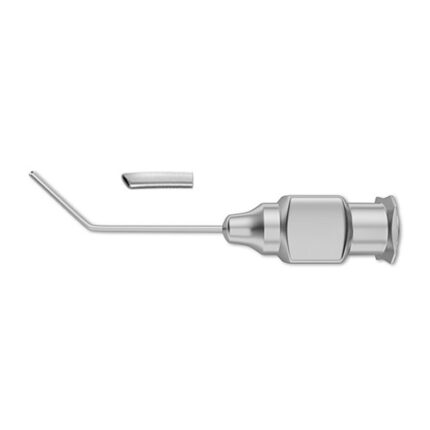
Nucleus Hydrodissection Cannula
SKU:
TT-SI-7747
25 gauge, 7.0 mm angled shaft w/ flattened tip, overall length 21.0 mm (excluding hub)Nucleus Hydrodissection Cannula is a useful tool in cataract extraction procedures. The cannula can be used to manipulate and rotate the lens during a hydrodissection for easier extraction. The small gauge with flattened tip assures minimal trauma to the surrounding tissue.
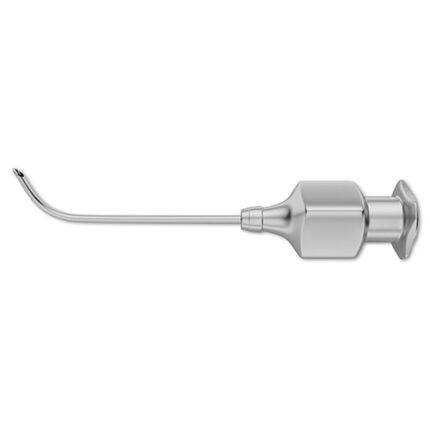
Bracken Anterior Chamber Cannula
SKU:
TT-SI-5219
curved, 19-gauge, overall length excluding hub 13/16" (2.1 cm) Bracken Anterior Chamber Cannula is a frequently used tool in cataract extraction procedures. The small gauge cannula is nimble enough to fit into a small limbal incision accessing the anterior chamber. It may be used to aspirate fluid within the anterior chamber exposing the lens capsule. The curved nature of the shaft assures minimal surgical obstruction.
Reviews
There are no reviews yet.